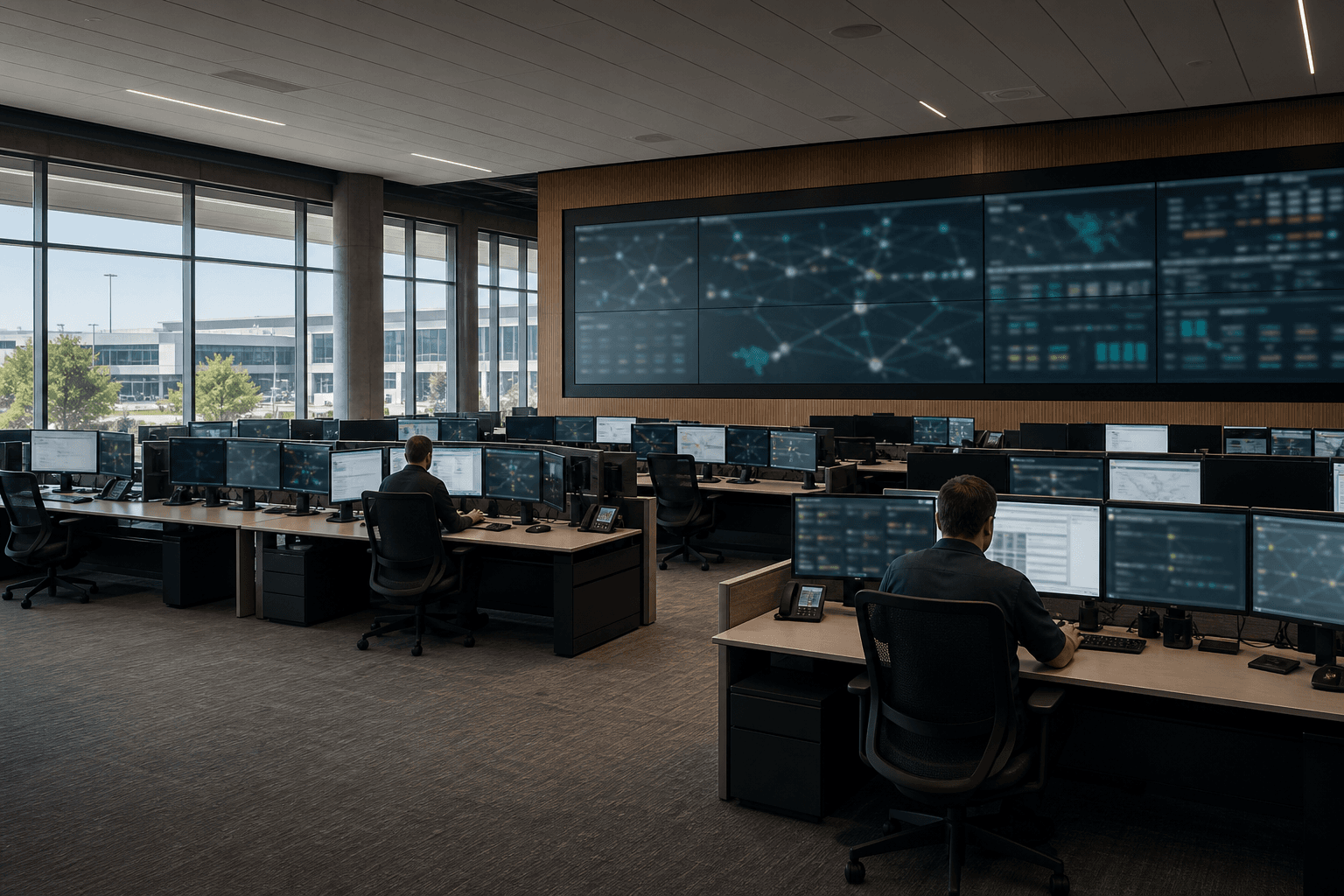
Computer vision on existing CCTV detecting queue formation, dwell time, curbside congestion, rideshare/taxi/shuttle mix; feeding a decision-support agent that recommends interventions (additional staff, lane reassignment, signage updates). The lowest-capex AI deployment in the airport dossier.
Buyer · COO + Airport Operations Center lead + landside-operations head. Easier to procure than airside CV; fewer cross-stakeholder dependencies.
Provenance tiered explicitly. Audited > Operator-disclosed > Vendor-published. Treat all vendor-tier figures as directional.
The win is the recommendation layer, not the detection layer. Detection is increasingly commoditized; the agent's value is in turning the signal into staffed action.
Compared to airside, this is the easier sale, but procurement still runs through public-sector cycles. Coordination with municipal traffic and rideshare/taxi/shuttle operators is non-trivial.
AICM's terminal-area curbside chaos is well-documented; the natural anchor pilot. AIFA's policy-driven traffic shifts make landside dynamic-routing even more valuable. Guadalajara (GAP) and Monterrey (OMA) are clean secondary-hub candidates.
Each node maps to a regulatory anchor.
- 01Existing CCTV: no new hardware
- 02CV detection: passenger cars, shuttles, rideshare, taxis
- 03State representation: queue length, dwell, congestion, mix
- 04Recommendation agent: intervention with confidence + ETA
- 05Ops-center dashboard with named operator approval
- 06Staff dispatch / signage update / lane reassignment
- 07Measurement loop: dwell, density, complaint rate
Not A "smart city" cliché. A multi-year transformation. A new-capex pitch.
But A 90-day proof at one terminal with one clear KPI, then expand.
Early deployments fail when the recommendation layer is rolled out without a named ops-center approver. The signal is good; nobody owns the action. The fix: every recommendation has an owner, an SLA, and a logged outcome.
A working session, not a sales call.
Two hours with a partner. Your incumbent stack, your data posture, and the regulatory surface against a sovereign reference architecture for aviation.
Request a working session →A working session, not a sales call.
Two hours with a partner. We map your AI spend, data exposure, and governance posture against a sovereign reference architecture. You leave with a memo. We leave with a decision.